Choosing the right construction equipment is one of the most important decisions for contractors, builders, and equipment buyers. Among the most commonly used machines in construction projects, backhoe loaders and excavators are often compared because both are capable of digging, earthmoving, and material handling.
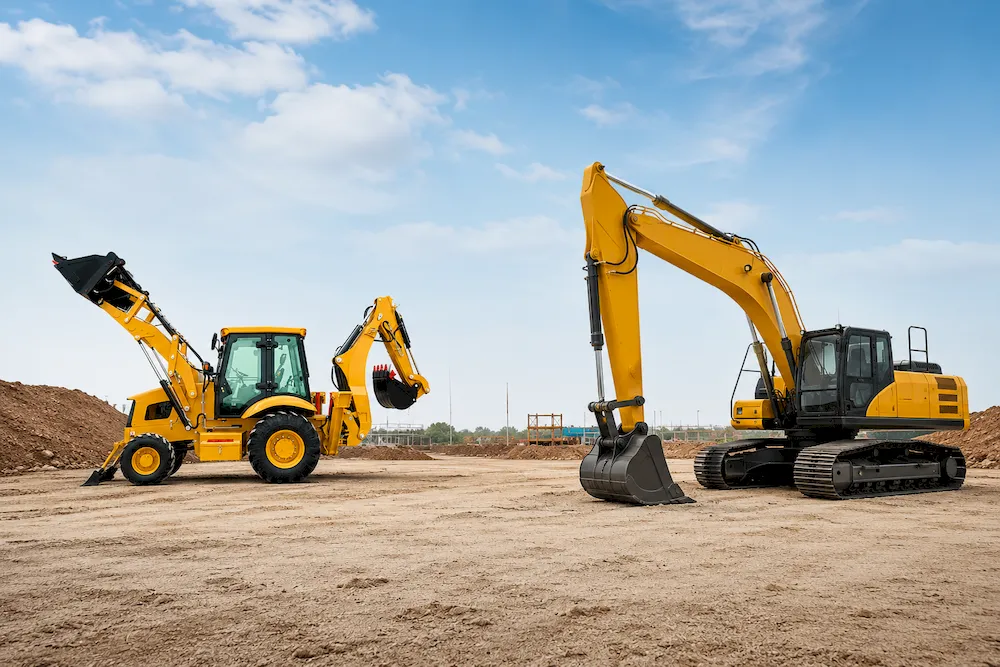
However, these two machines are designed for different working purposes. An excavator is specialized for heavy digging operations, while a backhoe loader combines excavation and loading functions into one versatile machine.
So, which machine is better for your project — a backhoe loader or an excavator?
The answer depends on your project type, working environment, required productivity, transportation needs, and budget. This guide compares backhoe loaders and excavators in detail to help you make the right equipment choice.
What Is a Backhoe Loader?
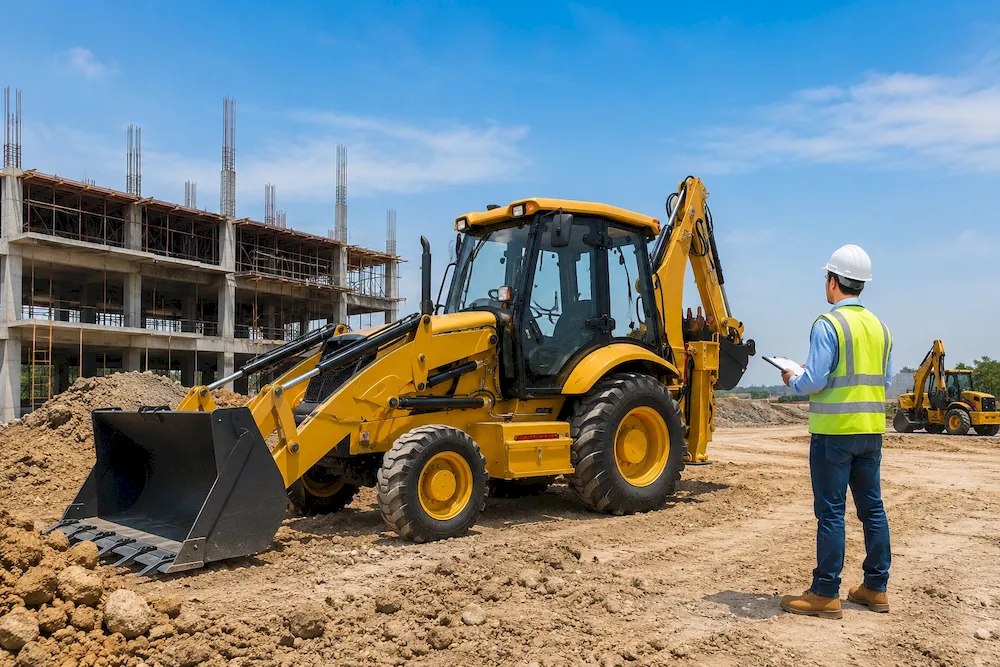
A backhoe loader is a multi-purpose construction machine that combines two major functions:
- A front loader bucket for loading and material handling
- A rear excavator arm for digging and trenching
This unique design allows operators to complete multiple tasks with a single machine.
Typical applications include:
- Road construction
- Utility installation
- Agricultural projects
- Landscaping
- Municipal engineering
- Small and medium construction projects
A backhoe loader is especially valuable for contractors who need flexibility because it can perform both excavation and loading operations without requiring additional equipment.
What Is an Excavator?
An excavator is a heavy-duty construction machine mainly designed for digging and earthmoving operations.
Its main components include:
- Boom
- Arm
- Bucket
- Hydraulic system
- Rotating upper structure
The excavator can rotate 360 degrees, providing excellent digging flexibility and working range.
Common applications include:
- Large-scale excavation
- Mining
- Foundation construction
- Demolition
- Heavy earthmoving
- Infrastructure projects
Excavators are usually preferred for projects that require high digging power and continuous heavy-duty operation.
Backhoe Loader vs Excavator: Main Differences
Although both machines can perform excavation tasks, their designs and advantages are different.
1. Function and Versatility
Backhoe Loader: Multi-Purpose Performance
The biggest advantage of a backhoe loader is versatility.
A single machine can handle:
- Digging trenches
- Loading soil and materials
- Moving construction materials
- Site preparation
- Road maintenance
For contractors managing different types of small and medium projects, a backhoe loader reduces the need to purchase multiple machines.
Excavator: Specialized Digging Capability
Excavators are designed primarily for excavation work.
They provide:
- Strong digging force
- Greater excavation depth
- Higher lifting capability
- Better performance in heavy-duty applications
When the main requirement is large-scale digging, an excavator usually performs better.
2. Digging Performance Comparison
Excavator Advantages
Excavators generally have stronger digging performance because of:
- Larger hydraulic systems
- Heavier operating weight
- Longer boom and arm designs
They are suitable for:
- Deep foundations
- Large trenches
- Rock excavation
- Mining operations
For projects requiring continuous excavation, excavators have a clear advantage.
Backhoe Loader Advantages
Backhoe loaders provide sufficient digging capability for many construction applications.
They are ideal for:
- Utility trenches
- Drainage systems
- Small foundations
- Roadside construction
The ability to switch between digging and loading makes them more efficient for mixed tasks.
3. Mobility and Transportation
Mobility is another important factor when selecting construction equipment.
Backhoe Loader Mobility
Backhoe loaders usually have wheels, allowing them to travel quickly between job sites.
Advantages include:
- Faster movement on roads
- Lower transportation requirements
- Better flexibility for multiple locations
For contractors working on several small projects, this mobility can significantly improve efficiency.
Excavator Mobility
Most excavators use crawler tracks.
Advantages:
- Better stability
- Stronger traction
- Suitable for rough terrain
However, excavators usually require transportation equipment such as trailers when moving between locations.
4. Operating Cost Comparison
Equipment investment is not only about purchase price. Long-term operating costs are also important.
Backhoe Loader Cost Advantages
Backhoe loaders can reduce costs because:
- One machine performs multiple tasks
- Less equipment is required
- Lower transportation costs
- Easier maintenance
This makes them attractive for small and medium-sized contractors.
Excavator Cost Advantages
Although excavators may have higher purchase and transportation costs, they provide excellent productivity for large projects.
For applications requiring:
- Large excavation volume
- Continuous operation
- Heavy material handling
An excavator can provide better return on investment.
5. Application Comparison
When Should You Choose a Backhoe Loader?
A backhoe loader is a better choice if your projects involve multiple tasks.
Recommended applications:
Road Maintenance
Backhoe loaders can perform:
- Drainage excavation
- Material loading
- Roadside repairs
Agricultural Projects
Common uses include:
- Land preparation
- Irrigation channels
- Farm infrastructure
Municipal Construction
Suitable for:
- Pipeline installation
- Underground cable projects
- Urban maintenance
When Should You Choose an Excavator?
An excavator is more suitable for heavy-duty projects.
Recommended applications:
Large Construction Projects
Including:
- Building foundations
- Commercial developments
- Large excavation work
Mining and Quarry Operations
Excavators provide the power required for:
- Rock digging
- Heavy material handling
- Continuous operation
Demolition Projects
Excavators can use specialized attachments for:
- Concrete breaking
- Structural demolition
- Material removal
6. Backhoe Loader vs Excavator: Quick Comparison
| Feature | Backhoe Loader | Excavator |
|---|---|---|
| Main Function | Multi-purpose operation | Heavy excavation |
| Digging Power | Good | Excellent |
| Loading Capability | Excellent | Limited |
| Mobility | High | Medium |
| Transportation | Easy | Requires trailer |
| Working Range | Medium | Large |
| Operating Cost | Lower | Higher |
| Best For | Small and medium projects | Large-scale projects |
7. How to Choose the Right Machine for Your Project?
Before purchasing construction equipment, consider the following questions:
What Type of Work Do You Mainly Perform?
If your work includes:
- Digging
- Loading
- Transportation
- General construction tasks
A backhoe loader may be the better choice.
If your work focuses mainly on:
- Deep excavation
- Large earthmoving
- Heavy-duty digging
An excavator may be more suitable.
What Is Your Job Site Condition?
Consider:
- Available working space
- Ground conditions
- Transportation distance
- Terrain type
For projects requiring frequent movement between locations, a backhoe loader provides greater flexibility.
For difficult terrain and heavy excavation, excavators offer stronger performance.
What Is Your Budget?
For many contractors, equipment investment is an important consideration.
A backhoe loader provides excellent value because it combines two machines into one.
An excavator provides maximum digging performance but may require additional equipment for loading and transportation.
Conclusion: Which Machine Is Better?
There is no universal answer to whether a backhoe loader or excavator is better. The right choice depends on your project requirements.
Choose a backhoe loader if you need:
- Versatility
- Lower operating costs
- Easy transportation
- Multi-purpose construction capability
Choose an excavator if you need:
- Maximum digging power
- Large-scale excavation capability
- Heavy-duty performance
For contractors working on diverse construction projects, a backhoe loader is often the most practical solution. It provides excellent flexibility and allows one machine to handle multiple tasks efficiently.
For large infrastructure, mining, and heavy excavation projects, an excavator remains the preferred choice due to its superior digging capability.
Understanding the differences between these two machines will help you select the right equipment, improve project efficiency, and maximize your investment.